Make Any Picture Sing: The Ultimate Singing Photo AI Guide

Make Any Picture Sing: The Ultimate Singing Photo AI Guide
Introduction
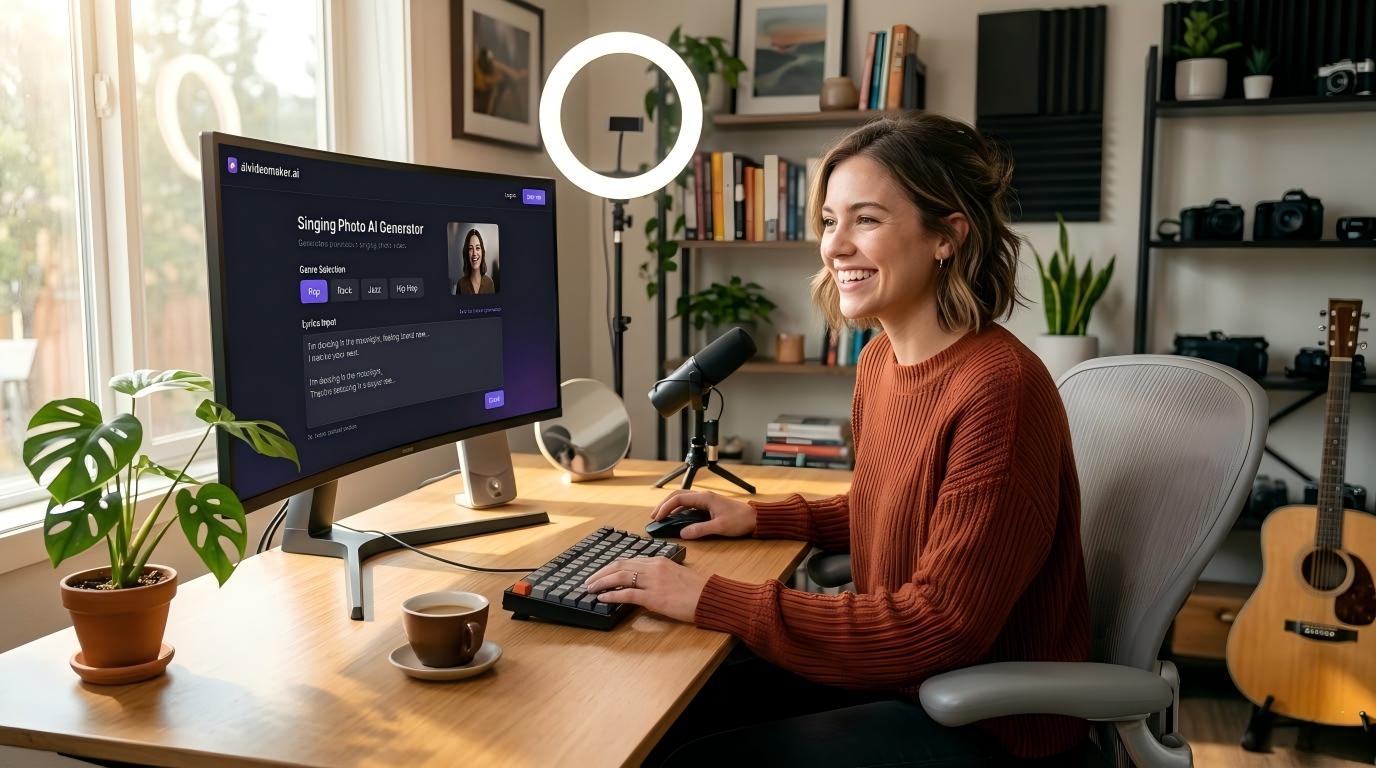
The contemporary digital broadcasting landscape is characterized by extreme algorithmic competition and rapidly decaying consumer attention spans. Community managers, enterprise marketing divisions, and independent social media creators are continuously battling severe engagement pain points: critically low watch times, immediate algorithmic suppression, and a fundamental inability to capture focal attention within the mandatory three-second window. To mathematically eradicate these engagement deficits, deploying a highly specialized singing photo AI is no longer an experimental creative luxury; it is an absolute engineering mandate for viral content distribution.
Historically, producing a high-retention musical hook required orchestrating complex logistical pipelines. Creators had to manually license backing tracks, hire professional vocalists, and spend hours in non-linear editing (NLE) software attempting to manually rotoscope or synchronize a static image to an audio waveform. The process was astronomically expensive, prone to severe synchronization errors, and fundamentally unscalable for the daily posting cadence demanded by platforms like TikTok and Instagram Reels.
By migrating your creative supply chain to a deterministic, cross-modal neural rendering environment, you can entirely bypass these mechanical bottlenecks. This comprehensive technical guide aggressively deconstructs the algorithmic physics of musical genre synthesis and audio-driven dynamic facial morphing. We will critically evaluate the precise parameters required to make photo sing effectively, and detail exactly how leveraging this specific generative architecture permanently mathematicalizes your virality metrics and guarantees unparalleled speed-to-market for your entire digital content portfolio.
Core Audio Generation & Facial Morphing Advantages
To objectively comprehend the structural superiority of an advanced audio-driven photo animation engine, computer vision engineers must deeply analyze the precise mechanics of Natural Language Processing (NLP) lyric interpretation and cross-modal acoustic synthesis. The process extends far beyond standard text-to-speech. Initially, the user inputs a discrete text array (the lyrics). The NLP module tokenizes these syllables and mathematically aligns them with a secondary input: the desired musical genre (e.g., 'heavy metal', 'synth-pop', 'opera'). The generative acoustic model synthesizes a completely original, multi-track audio waveform, generating the instrumental backing track while simultaneously producing a highly emotive human vocal performance that perfectly mirrors the specified melodic cadence.
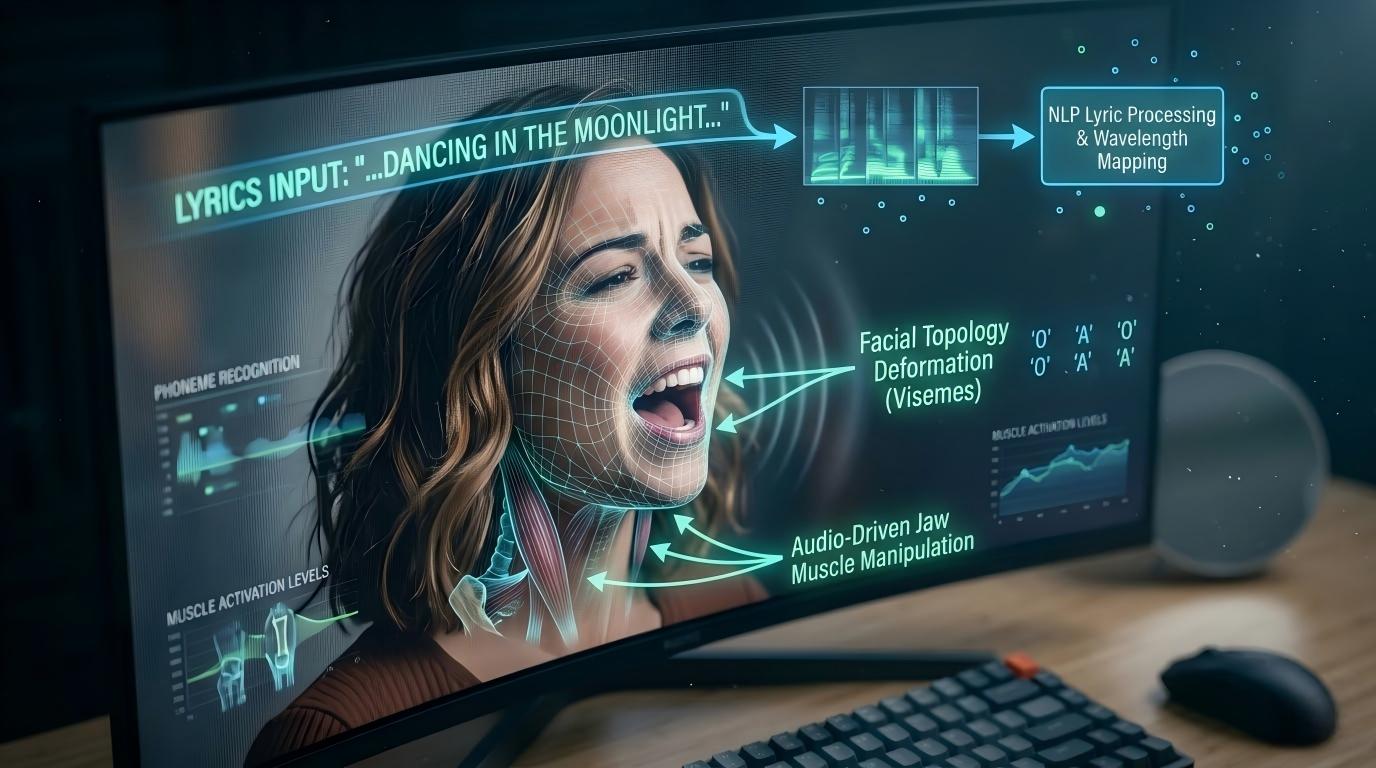
Once the high-fidelity acoustic waveform is generated, the system executes rigorous dynamic jaw muscle manipulation. Standard consumer-grade filters simply stretch a 2D mesh up and down across the Y-axis, resulting in a comical, highly unconvincing 'flapping' effect. An enterprise-grade generative model deploys a sophisticated viseme-to-phoneme mapping protocol. It analyzes the synthesized vocal track and calculates the exact spatial displacement required for the lips, tongue, and teeth to physically enunciate the generated syllables.
Furthermore, to eliminate visual dissonance, the algorithm executes comprehensive topological morphing across the entire facial structure. As the synthesized vocal hits a high note or executes vibrato, the neural network calculates corresponding micro-contractions in the zygomaticus major (cheek muscles) and naturally shifts the orientation of the cranium. By enforcing strict Eulerian flow algorithms, the engine guarantees that the background pixels surrounding the subject remain perfectly stabilized, mathematicalizing a flawless, high-fidelity visual asset that safely bypasses the consumer's physiological 'uncanny valley' rejection response.
Critical Market Applications & Real-World Use Cases
The strategic deployment of algorithmic musical synthesis is aggressively dictated by the hyper-accelerated distribution lifecycles of modern social media architectures. In the highly competitive arena of digital asset optimization, community managers and brand strategists require continuous, high-volume output of pattern-interrupting content to secure algorithmic traction. Consequently, attempting to manage a viral social feed relying purely on static graphics guarantees catastrophic engagement drops. Therefore, these professionals actively deploy neural musical synthesis to instantly capture and retain user attention.
Furthermore, highly successful TikTok creators and Instagram influencers utilize this specific viral meme generator to orchestrate high-retention scroll-stoppers. Consequently, by uploading an absurd or highly recognizable static portrait, and coding an aggressive, comedic lyric script, the creator generates an immediate psychological pattern interrupt. Therefore, this rapid deployment strategy mathematically ensures maximum view-through rates, signaling the host platform's recommendation algorithm to aggressively distribute the video packet to broader audiences. Furthermore, this dynamic capability completely isolates the creator's publishing velocity from the logistical nightmare of recording live musical performances or navigating complex music licensing negotiations.
Consequently, corporate enterprise divisions are adopting these exact protocols to humanize their B2B communications. Therefore, when launching a new software product or executing an internal corporate announcement, managers can generate bespoke musical AI clips using an image of the company mascot or CEO. Furthermore, the marketing team can adapt these synthesized assets to diverse distribution channels instantly, adjusting the musical genre to perfectly match the target demographic. Consequently, this proprietary digital pipeline legally isolates the brand's creative operations from inferior competitors relying on inert, text-heavy media formats, ensuring continuous, high-margin audience retention.
Comparison Matrix: Viral Content Production Modalities
To objectively evaluate the structural and financial viability of varying digital media production modalities, procurement engineers must critically analyze comparative engagement data. The following matrix contrasts specialized AI Singing Generation against legacy visual synthesis alternatives across critical performance metrics:
| Production Modality | Musicality & Audio Quality | Virality Potential (Engagement) | Rendering Speed & Throughput | Software Complexity & Ease of Use |
|---|---|---|---|---|
| Singing Photo AI | Supreme. Natively synthesizes studio-quality instrumentals and perfectly synced vocals. | Extremely High. Generates profound pattern interrupts optimized for TikTok/Reels algorithms. | Instant (Minutes). Requires only a single image, text lyrics, and a genre prompt. | Minimal. Intuitive web interface; zero specialized audio engineering skills required. |
| Manual Lip-Syncing (Live) | Variable. Depends entirely on the human creator's physical performance and audio alignment. | High, but hyper-saturated. Difficult to stand out without exceptional human talent. | Slow. Requires physical recording setup, lighting, and multiple performance takes. | Moderate. Demands physical coordination and basic NLE synchronization skills. |
| Audio Dubbing Apps | Poor. Typically relies on low-quality robotic TTS layered over basic jaw flapping. | Low. Users immediately recognize cheap filters, resulting in instant swipe-aways. | Fast, but the resulting asset is fundamentally unusable for high-stakes marketing. | Low. Standard mobile app interface, but produces heavily artifacted outputs. |
| Static Memes (Text overlays) | Non-Existent. Operates purely in the visual spectrum with zero acoustic engagement. | Moderate. Can perform well on legacy platforms (Reddit/Twitter), but fails on video-first feeds. | Instantaneous. Rapid creation via standard graphic design software. | Extremely Low. Requires basic text-formatting capabilities. |
Execution Best Practices & Prompt Specs
Executing a structurally flawless, highly viral musical sequence requires absolute adherence to rigorous syntactic and visual parameters. The raw visual data packet supplied to the neural network acts as the foundational structural seed for all subsequent facial topology manipulation. To effectively animate picture with lyrics, the user must supply a high-resolution photograph where the subject's face is clearly isolated, unobstructed, and well-illuminated. If the uploaded image features extreme lighting contrasts, heavy shadows over the jawline, or objects blocking the mouth, the monocular depth estimation will fail, resulting in severe hallucinatory artifacts during the singing animation.
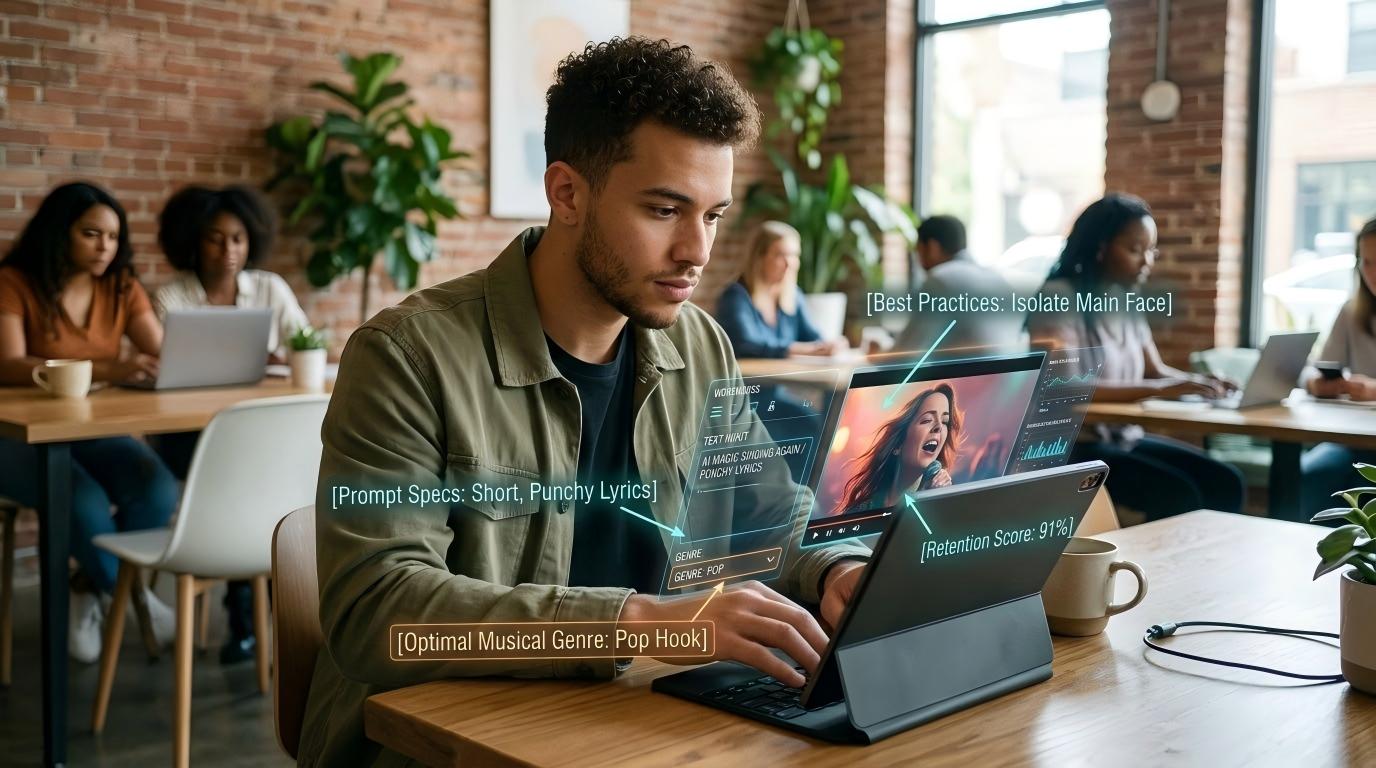
Furthermore, the mathematical construction of the text prompt is the most critical operational parameter governing acoustic fidelity. The NLP engine performs optimally when processing short, punchy lyric structures. Attempting to force the engine to sing a massive, uninterrupted paragraph without line breaks or punctuation will destabilize the rhythmic cadence, resulting in rushed, off-beat vocalizations. Engineers must format the lyrics rhythmically, using line breaks to implicitly command natural pauses and breaths within the generated vocal track.
Finally, users must strategically pair their lyrics with highly optimized musical genre descriptors. Entering vague commands like 'pop music' yields variable results. By commanding highly specific acoustic parameters---such as 'upbeat 80s synth-pop, heavy bassline, female soprano vocal' or 'aggressive death metal, distorted guitars, deep growl'---the user mathematically restricts the generative variance of the acoustic model. For creators requiring precise background stabilization before animating the subject, we highly recommend processing the initial image through our advanced AI Image Editor to clean the geometric layout prior to initiating the viseme-to-phoneme rendering pipeline.
Frequently Asked Questions (FAQ)
1. Who owns the copyright to the AI-generated musical backing track and vocal performance?
The acoustic models utilized by our advanced generation matrix synthesize entirely original waveforms from scratch based on your prompt data; they do not sample or splice copyrighted commercial audio. Therefore, under Premium and Pro subscription parameters, you are granted full, unconditional commercial usage rights to distribute, monetize, and broadcast the resulting audio-visual asset across all global networks.
2. What are the strict mathematical limits regarding lyric length and generation duration?
To ensure supreme model stability and prevent server-side timeout protocols, the generation matrix imposes strict computational length limits per request. Currently, the singing photo module is highly optimized for short-form social media hooks, typically restricting lyric input to a specific character count that roughly equates to 15 to 30 seconds of high-fidelity continuous audio synthesis.
3. How does this advanced tool calculate credit consumption per generation?
Because executing simultaneous acoustic synthesis and complex facial topology manipulation requires massive, dedicated GPU compute overhead, this feature is classified as an advanced tool. Consequently, credit consumption is dynamically calculated based on the total seconds rendered. Users are advised to mathematicalize their operational budgets by upgrading to our optimal Subscription Plans to ensure sufficient rendering bandwidth for high-volume campaigns.
4. Can the algorithm accurately animate non-human subjects, such as animals or illustrations?
The core viseme-to-phoneme architecture is primarily trained on dense datasets of human facial landmarks. While it can successfully extrapolate and animate highly anthropomorphic illustrations, 3D renders, or comic characters, attempting to animate hyper-realistic animals (like a dog or cat) may yield unpredictable, gelatinous warping, as their biological jaw mechanics do not perfectly align with human phonetic data.
5. Is it possible to upload my own pre-recorded voice or song for the photo to sing?
The dedicated 'Singing Photo' module operates as a text-to-music-to-video pipeline. If you already possess a finalized, pre-recorded audio track and merely need a static image to lip-sync to that specific file, you must transition your workflow to the 'AI Talking Photo' module, which is engineered explicitly to accept direct external audio injections rather than synthesizing original melodies.
6. What is the optimal resolution for exporting these viral video assets?
Drafting operations are mathematically restricted to a highly efficient 480p standard definition to guarantee Zero-Anxiety testing and low server latency. To ensure your viral musical meme is broadcast-ready and visually dominant on modern high-density smartphone displays, you must route your approved draft through the integrated AI Video Upscaler to algorithmically hallucinate the pixels necessary for a pristine 720p or 1080p HD export.
Conclusion
The engineering reality within the high-stakes digital media landscape is irrefutable: attempting to scale a modern social media presence relying purely on static imagery or archaic, manual lip-syncing guarantees catastrophic algorithmic suppression and severe audience disengagement. By migrating your brand's creative supply chain directly to our structurally flawless AI Video Maker facility, you permanently mathematicalize your product's market readiness. We guarantee absolute resistance to ad fatigue and unlock unprecedented, viral speed-to-market for your entire visual catalog.
Do not compromise your brand's operational survival with substandard, motionless assets. Secure your entire digital marketing supply chain by upgrading your algorithmic capabilities today. Access the specialized Singing Photo AI module to instantly synthesize your first viral musical hook, drastically elevate your engagement metrics, and fundamentally revolutionize your global digital trajectory.